

What Are the Benefits of GI MAP Testing for Gut Health?
The GI MAP Test provides valuable insights into your gut microbiome, helping identify imbalances, infections, or underlying conditions affecting digestion and overall health. It offers a comprehensive analysis of gut pathogens, including bacteria, parasites, and fungi, enabling precise treatment plans. At Primary Prevention Center, our team emphasizes the importance of GI MAP testing for creating personalized approaches to improve gut health and enhance overall well-being. This advanced testing approach helps evaluate key digestive markers that may influence nutrient absorption, immune function, and metabolic wellness. By understanding your unique gut profile, our team can develop targeted recommendations focused on supporting long-term digestive health and overall vitality. For more information, contact us or request an appointment online. We are located at 638 Newtown-Yardley Road Suite 2G/H, Newtown, PA 18940.

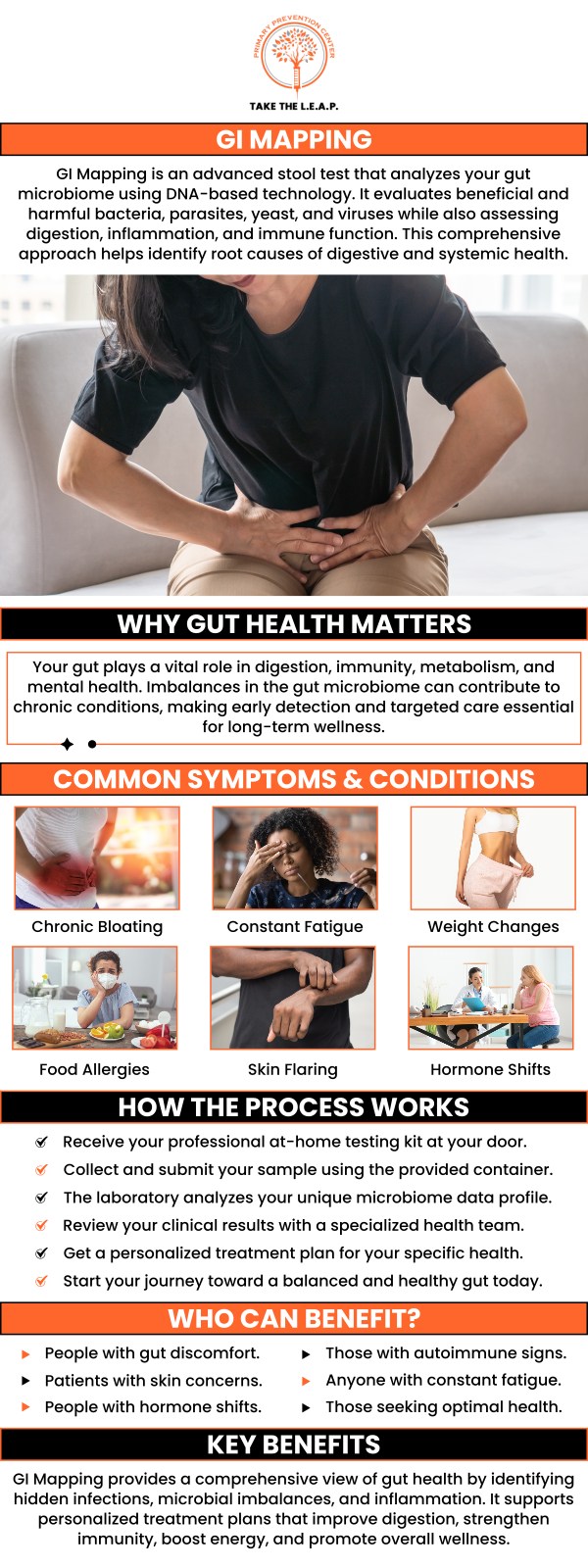
Table of Contents:
What is the GI-MAP test, and how does it assess gut health?
How does the GI‑MAP test help uncover digestive imbalances?
What symptoms can GI‑MAP testing help investigate?
Why is quantitative PCR technology important in the GI-MAP test?
How Can Our Team Help You Discover the Benefits of GI MAP Testing for Gut Health?
The GI-MAP test is a comprehensive stool analysis that evaluates the health of the gut microbiome using quantitative PCR (qPCR) technology. This test identifies and quantifies over 60 gut-related pathogens, including bacteria, viruses, parasites, and fungi, providing a thorough assessment of the gut’s microbial balance. Unlike traditional stool tests, which only detect the presence or absence of organisms, the GI-MAP test provides quantitative data, offering precise measurements of microbial DNA.
By accurately assessing the gut flora, the GI-MAP test helps to uncover dysbiosis (microbial imbalance) and detect pathogenic organisms that may be affecting digestion and overall health. At Primary Prevention Center, Michael Como utilizes the GI-MAP test to create personalized treatment plans aimed at restoring gut balance, improving digestion, and enhancing immune function, ultimately contributing to better overall health.
The GI-MAP test helps uncover digestive imbalances by providing a detailed analysis of the microbial organisms in the gut, including bacteria, parasites, and fungi. It specifically quantifies the presence of both pathogenic organisms and beneficial bacteria, helping to identify areas of dysbiosis (imbalance). For example, the test can detect overgrowths of harmful bacteria like Clostridium difficile or Candida, which can contribute to symptoms like bloating, gas, and diarrhea.
By identifying these imbalances, the GI-MAP test allows healthcare providers at Primary Prevention Center to recommend targeted interventions such as dietary adjustments, supplements, or antimicrobial therapies. Additionally, the ability to quantify microbial levels helps practitioners determine the severity of imbalances, making treatment plans more effective and personalized. This approach ensures that patients receive the right treatment for their specific gut health needs, promoting better digestion and overall wellness.
GI‑MAP testing can help investigate a wide range of digestive symptoms and related conditions. It is particularly useful for those experiencing chronic bloating, gas, diarrhea, or constipation, as these symptoms are often linked to gut imbalances. The test also identifies underlying causes of irritable bowel syndrome (IBS), gastric reflux (GERD), and autoimmune conditions, all of which can be influenced by gut health. Fatigue, skin issues, and even brain fog may also be traced back to microbial imbalances in the gut.
By identifying overgrowths of harmful bacteria, parasites, or fungi, the GI-MAP test helps uncover hidden causes of these symptoms, leading to more accurate diagnoses and effective treatment plans. At Primary Prevention Center, our team uses the results to guide personalized protocols, targeting specific microbial imbalances and improving overall health by addressing the root causes of these issues.
Quantitative PCR (qPCR) technology is crucial in the GI-MAP test because it provides highly accurate and sensitive measurements of microbial DNA in stool samples. Unlike traditional PCR, which only detects the presence of microorganisms, qPCR quantifies the amount of each organism present, offering precise numerical data. This allows healthcare providers to understand not just whether a pathogen is present, but how abundant it is, which is essential for diagnosing conditions like dysbiosis, parasites, and bacterial overgrowth.
With qPCR, practitioners at Primary Prevention Center can distinguish between harmless microbes and pathogenic organisms, allowing for more tailored and effective treatments. The technology’s ability to produce reproducible results ensures consistent monitoring of gut health, enabling practitioners to track the effectiveness of treatments over time and adjust protocols as necessary.
At Primary Prevention Center, our team emphasizes the importance of GI-MAP testing for individuals experiencing digestive concerns or ongoing health challenges. The GI-MAP test provides a detailed analysis of gut health by identifying and measuring pathogenic organisms and microbial imbalances within the gut microbiome. With comprehensive results, our team can better understand your unique gut profile and develop personalized recommendations focused on supporting digestion, immune function, and overall wellness.
Whether you are experiencing symptoms such as bloating, fatigue, or concerns related to autoimmune conditions, GI-MAP testing can provide valuable insights into potential factors affecting your health. At Primary Prevention Center, our team uses this advanced testing approach to help identify areas of imbalance and support individualized strategies designed to promote long-term gut health and overall well-being. For more information, contact us or request an appointment online. We are located at 638 Newtown-Yardley Road Suite 2G/H, Newtown, PA 18940. We serve patients from Newtown PA, Richboro PA, Newtown Grant PA, Churchville PA, Woodbourne PA, Yardley PA, Bucks County PA, and surrounding areas.
Check Out Our 5 Star Reviews



Additional Services We Offer
▸ Dietary Consultation & Planning
▸ IV Vitamin Therapy
▸ Diabetes
▸ Hypertension
▸ Insomnia
▸ Autoimmune Disease
▸ Meal planning


 Send Text
 How May I Help You?